Online or onsite, instructor-led live Software Design training courses demonstrate through interactive discussion and hands-on practice the fundamentals of Software Design.
Software Design training is available as "online live training" or "onsite live training". Online live training (aka "remote live training") is carried out by way of an interactive, remote desktop. Iowa onsite live Software Design trainings can be carried out locally on customer premises or in NobleProg corporate training centers.
NobleProg -- Your Local Training Provider
Des Moines, IA - Hub Tower
699 Walnut Street, Des Moines, United States, 50309
The Hub Tower location is easily accessible by car via Interstates 35 and 80, with underground and nearby public parking available; simply head downtown to Walnut Street. Guests arriving from Des Moines International Airport (DSM) can expect a 10‑ to 15‑minute taxi or rideshare journey via I‑235 and I‑35 into downtown. For public transportation users, DART buses stop close to the building, and it also connects via the downtown skywalk to neighboring business and cultural venues.
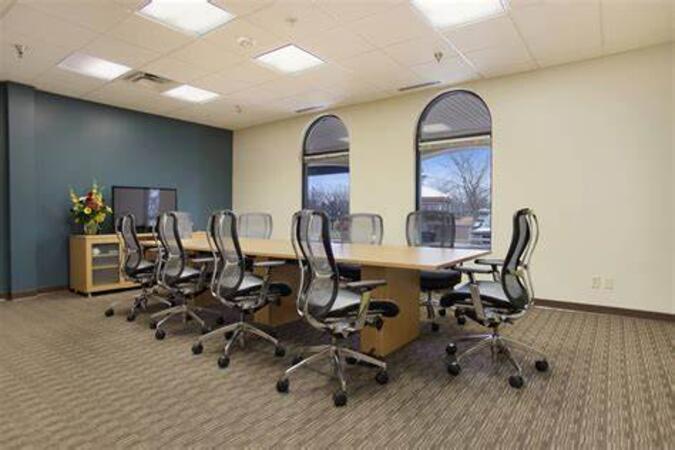
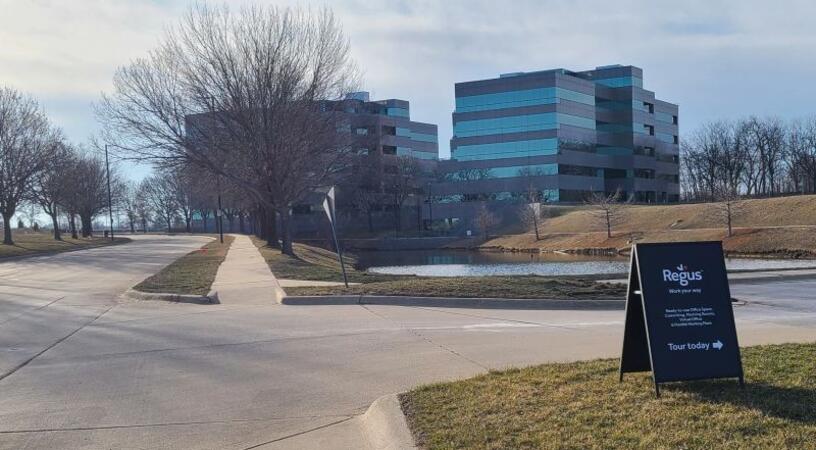
IA, Johnston - Regus - Foxboro Square
6165 Northwest 86th Street, Johnston, United States, 50131
Regus Foxboro Square enjoys a highly accessible suburban location—and is easily reached by car via Interstates 80/35. Ample free parking is available in the surface lots surrounding the building. For those arriving from Des Moines International Airport (DSM), the venue is approximately 16.6 km (about a 15–20 minute drive) via I‑35 north. Public transit users can take Johnston-area bus services to nearby stops; the facility is also adjacent to Dover Park’s walking and biking trails, providing a healthy commute option.
Cedar Rapids, IA - Regus – Edgewood Pointe
4515 N River Blvd NE #200, Cedar Rapids, United States, 52411
Regus Cedar Rapids is easily accessible by car via I‑380 or I‑80 toward northeast Cedar Rapids, exiting at Edgewood Road and traveling south on River Boulevard. Complimentary on-site surface parking ensures convenience for event attendees. For travelers arriving at Des Moines International Airport (DSM), the venue is approximately a 90‑minute drive via I‑80 and I‑380. Local participants can reach the centre using Cedar Rapids Transit Route 10, with stops near River Boulevard and Edgewood Pointe.
In this Iowa course, teams learn Design Thinking to solve problems through empathy, ideation, and prototyping. Focusing on the Empathize stage, you will connect pain points to internal client needs, transforming insights into actionable outcomes via dynamic collaborative activities.
This live training in Iowa equips teams and leaders with the Empathize and Define stages of Design Thinking. Participants will master active listening, empathy mapping, and the 5 Whys technique to uncover root causes and draft clear, actionable problem statements for internal clients.
This instructor-led, live training in Iowa (online or onsite) is aimed at beginner-level to intermediate-level professionals who wish to understand and apply Design Thinking methodologies to drive innovation and improve business solutions.
By the end of this training, participants will be able to:
Understand the core principles of Design Thinking and its role in innovation.
Apply the five phases of Design Thinking to problem-solving.
Utilize ideation techniques and tools to foster creativity.
Implement Design Thinking strategies to improve processes and enhance efficiency.
This instructor-led, live training in Iowa (online or onsite) is aimed at beginner-level to intermediate-level participants who wish to solve everyday workplace challenges through gamification techniques.
By the end of this training, participants will be able to:
Understand the principles of Design Thinking and its application to problem-solving.
Incorporate gamification techniques to foster engagement and innovation.
Develop creative and practical solutions to common workplace issues.
Collaborate effectively across teams to implement problem-solving strategies.
Apply iterative approaches to refine solutions through feedback and experimentation.
This instructor-led training in Iowa equips senior developers with advanced Domain-Driven Design skills. Learn to apply strategic and tactical patterns, define bounded contexts, and integrate DDD into Agile workflows to build robust, scalable, and maintainable software systems.
This instructor-led, live training in Iowa (online or onsite) is aimed at intermediate-level developers, architects, and analysts who wish to learn and apply DDD concepts and practices to their software projects.
By the end of this training, participants will be able to:
Grasp core DDD concepts (bounded contexts, entities, etc.) and their application in software projects.
Apply strategic DDD to define and design the domain model, identify subdomains, and establish boundaries.
Implement tactical DDD using patterns such as CQRS, factories, and event sourcing.
Refactor and modernize legacy systems effectively with DDD techniques.
Design and implement product, domain, and team-oriented architectures.
Utilize data mesh to create a domain-oriented data platform supporting data discovery and governance.
This instructor-led, live training in Iowa (online or onsite) is aimed at beginner-level leaders and HR professionals who wish to learn and apply Design Thinking methodologies to foster innovation, enhance problem-solving capabilities, and engage teams effectively.
By the end of this training, participants will be able to:
Equip participants with tools and methodologies to foster innovation and team engagement.
Develop skills in empathy mapping, ideation, and prototyping for solving complex challenges.
Apply Design Thinking principles to leadership and HR scenarios.
Promote a culture of innovation within tech teams.
This instructor-led, live training in Iowa (online or onsite) is aimed at intermediate-level Java developers who wish to apply design patterns to improve software structure, maintainability, and scalability.
By the end of this training, participants will be able to:
Understand the purpose and benefits of design patterns.
Apply Creational, Structural, and Behavioral patterns effectively in Java.
Improve code reusability, scalability, and maintainability.
Refactor existing codebases using design patterns.
This instructor-led, live training in Iowa (online or onsite) is aimed at beginner to intermediate-level software and systems designers who wish to get a structured and comprehensive understanding of Sparx Enterprise Architect.
By the end of this training, participants will be able to:
Navigate and effectively use Sparx Enterprise Architect, understanding its interface and tools.
Model various business structures including organization charts, processes, and systems using different diagrams.
Implement change tracking, version control, and team collaboration strategies within Sparx EA.
Utilize advanced Sparx EA features like modeling with stereotypes, customization, and task automation.
This 21-hour training in Iowa explores essential Kubernetes design patterns for microservices. Participants will learn foundational, behavioral, structural, and configuration strategies to build resilient, scalable, and cloud-native applications through hands-on live-lab exercises.
This instructor-led training in Iowa covers core and advanced software architecture and design principles. Participants will engage in hands-on lab exercises, discussions, and group projects to develop robust, scalable, and secure software solutions applicable to real-world enterprise challenges.
Learn Domain Driven Design to align software with business concepts. Master strategic and tactical patterns, including Ubiquitous Language and Bounded Contexts. This training in Iowa helps teams manage complexity and build flexible, maintainable software architectures.
This 14-hour Design Patterns course in Iowa teaches you to reuse tried-and-tested patterns to save hundreds of hours on design and testing. You will learn to create organization-specific patterns, estimate cost reductions, and systematize your design process using UML and Java examples.
In this instructor-led, live workshop training in Iowa (online or onsite), participants will learn how to apply the five stages of Design Thinking to better understand the problems experienced by end-users of a product or service, then develop the best approach for resolving them.
By the end of this training, participants will be able to:
Use creative strategies to match customers' needs with technologically feasible solutions.
Formulate a strategy to increase customer value and enhance product and service offerings.
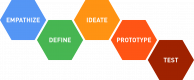
There are Five stages in the Design Thinking (DT) process (empathize, define the problem, ideate, prototype, test).
In an increasingly complex world, we deal with problems that may need special approaches. Design Thinking helps deal with complex problems. Mastering design-thinking helps to deal with complex problems effectively, communicate better, persuade efficiently, improve business results and enhances organizational and personal behavior and performance.
How DT works: learn from people and problem, find patterns, design model (model drift), test the model, evaluate the model and re-engineer.
Relationship between DT, innovation and entrepreneurship.
DT methods and tools: persona, stakeholder map, customer journey map, service blueprint, business model innovation.
Application of DT: design mindset, disruptive innovation, iterative approach, agile estimation technique, critical thinking, problem solving, teamwork, leadership readiness, communication skills, technology savvy, forward thinking, intercultural and ethical competency, emotional intelligence, self-awareness, negotiating skills, conflict resolution.
Objectives:
To understand the fundamentals and nuances of DT
To explore key concepts, factors, theories, types, and models in DT
To experiment, experience and practice DT
Delivery:
This is a 1 day (4 hours) training course and consists of:
lectures (40% - presentation of theories, concepts, models, and interactions),
group exercises (30% - group dynamics, games, group discussion, and mock-conflict resolution exercises),
individual activities (15% - writing, designing and peer discussion)
and others (15% - videos, reading).
Note: due to the nature of this course there is a minimum group size of 3
This instructor-led, live training in Iowa (online or onsite) is aimed at intermediate-level PHP developers who wish to apply design patterns effectively in their projects.
By the end of this training, participants will be able to:
Understand the purpose and benefits of design patterns.
Identify and implement appropriate design patterns for common scenarios.
Structure PHP applications using industry-recognized best practices.
Integrate patterns into modern frameworks such as Symfony or Zend.
This live training in Iowa covers embedded C design principles, helping developers understand reliability, functionality, and logic. It includes hands-on exercises to design error-free applications, optimize hardware performance, and master system constraints, code reusability, and maintainability.
This 14-hour advanced JavaScript course in Iowa targets developers building complex web applications. It covers object-oriented programming, design patterns, and asynchronous communication strategies like Promises and RxJS, focusing on best practices to enhance code structure.
Designed for experienced programmers, this 21-hour course in Iowa explores design patterns and refactoring strategies. Participants will learn GoF patterns, enterprise architecture, and practical tools to build efficient, maintainable PHP application code through hands-on sessions.
This comprehensive course in Iowa covers RISC-V architecture, assembly, Linux, FPGA, and AI applications. It addresses the global talent shortage by building expertise from ISA fundamentals to advanced SoC design. Ideal for engineers seeking to master modern, open-source computing stacks.
In this live training held in Iowa, participants will explore the deep interplay between software, technical, and enterprise architecture. Learn to manage complex distributed systems and trade-offs while mastering common patterns for SOA, microservices, and efficient communication between systems.
This course in Iowa prepares developers and architects for the UML2 Intermediate exam. It covers complex modeling, classification, and state machines. Learn to build detailed UML models and become a qualified senior member of a UML development team by mastering essential design elements.
Read more...
Last Updated:
Testimonials (6)
Trainer knowledge, involvement, and rapport
Adam Kuklewski - GE Medical Systems Polska
Course - Technical Architecture and Patterns
complete, subject-focused, with multiple exercises and examples
Grzegorz Sposob - ASSECO POLAND S.A.
Course - OCUP2 UML Certification - Preparing for the UML2 Intermediate exam.
The explanations and interactivity of the trainer, he really brought the subject well; and even-though I was probably not experienced enough, I did learn a lot from it!
Pieter Bruynseels - Spot Buy Center BV
Course - Design Patterns
I liked the exercises that helped to open the mind and gain new insights into software architecture.
Gabriele - EAGLEPROJECTS S.p.A.
Course - Architecture and Design: Core + Advanced Training
I liked the platform we used. It was really nice and easy to use. I liked the typescript section, the part about namespaces and modules.
Online Software Design training in Iowa, Software Design training courses in Iowa, Weekend Software Design courses in Iowa, Evening Software Design training in Iowa, Software Design instructor-led in Iowa, Weekend Software Design training in Iowa, Software Design private courses in Iowa, Software Design instructor in Iowa, Software Design boot camp in Iowa, Online Software Design training in Iowa, Software Design one on one training in Iowa, Evening Software Design courses in Iowa, Software Design on-site in Iowa, Software Design classes in Iowa, Software Design instructor-led in Iowa, Software Design coaching in Iowa, Software Design trainer in Iowa